
Loyalty Marketing does not need a Loyalty Program
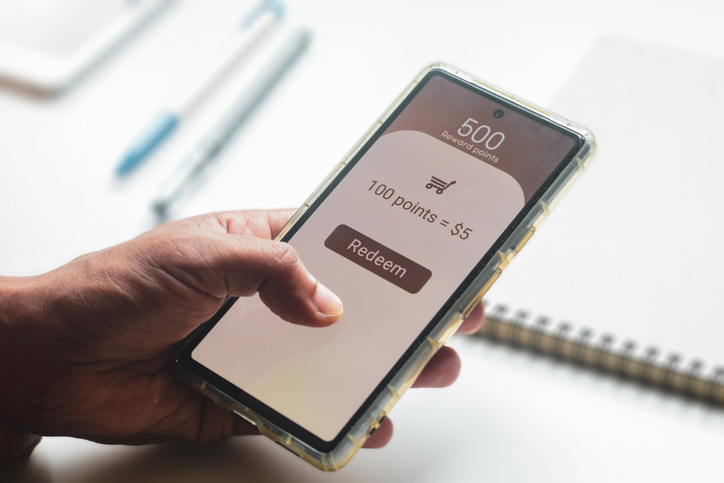
Loyalty marketing and loyalty programs are often treated as the same thing. They are not. The program is one expression of loyalty marketing, designed at a time when it solved a specific commercial problem of customer recognition. Loyalty marketing addresses the broader question of how a brand keeps spending in front of customers worth keeping.
Adam Simms, co-founder of SIVV, points to the original purpose of the program. "Loyalty programmes were originally designed to help brands better understand their customers," he says. "Until recently, many brands knew very little about who their actual customers were. For example, if someone walked into a shop off the street and made a purchase, there was little way to recognise a repeat customer."
The program was the trade. Membership in exchange for a name, an email address, and a way to track repeat behaviour. For a long time, the trade was worth it for both sides.
The customer recognition problem is largely solved
What has changed is the rest of the customer base. E-commerce produces a known customer by default. In-store purchases are increasingly captured through electronic receipts and other identification mechanics. The need to bribe a customer for the privilege of recognising them has narrowed considerably.
"Mechanics, such as emailing in-store customers their receipts, mean brands can identify who their customer is without requiring an overt loyalty proposition," says Simms.
Once recognition stops being the bottleneck, the program is asked to justify itself on a different basis. Does the tier structure earn the cost of the points engine, the operational overhead, the discount it gives away, and the time the marketing team spends managing the rules? For a meaningful number of brands, the honest answer is no.
What incognito loyalty actually means
The alternative is what SIVV calls incognito loyalty. The label is less important than what it removes and what it leaves behind.
What it removes is the public scaffolding. The tier names. The points balance the customer is supposed to track. The anniversary discount that arrives whether or not the customer needed a reason to come back. What it keeps is the underlying intent of loyalty marketing, which is a relevant interaction with the right customer at the right time.
Take the same $20 voucher. In a tiered program, it lands when Sarah hits silver after spending $500 in six months, on the date the calendar says it should. In an incognito approach, the same voucher lands when it is most likely to change Sarah's behaviour. If she has slowed down, it arrives early enough to matter. If she is on a steady curve, it might be reinvested as a gift with purchase or a basket-size incentive instead. The cost to the brand is the same. The commercial outcome is not.
"With incognito marketing, the discount offer can be made at a timeframe that is most relevant to that customer's behaviour," says Simms. "For example, if it's taken longer than expected for the customer to transact with the brand. In other words, it's about interacting with customers in a way that is right for them, and isn't simply defined by whatever loyalty tier they fall into."
The case for stopping at incognito
The cost case is straightforward. Tiered programs are expensive to run. Points engines, redemption logistics, tier maintenance, member communications, all of it carries a fixed cost that scales with membership rather than with revenue. For brands where the program was bolted on years ago and the world around it has moved on, the running cost has often outgrown the commercial return.
The customer-side case is also harder to argue against than it used to be. "Customers have more choice regarding what to purchase, when to purchase and where to buy from than ever before. So, securing loyalty is arguably more important than ever," says Simms. "That's why it's so important to talk to customers in a way that's compelling and relevant."
The supporting numbers point the same way. 80% of consumers say they are more likely to buy from a brand that delivers a tailored experience. 48%expect specialised treatment for being a good customer. The customer expectation has shifted from "what tier am I in" to "do you know what I actually want from you".
None of this requires an either-or. An incognito approach can run alongside an existing program where the program still earns its place, supplementing the tier structure with the personalised interactions it cannot produce on its own. Where the program no longer earns its place, the incognito approach replaces it without removing anything the customer was getting value from.
Where the work happens
The mechanics of an incognito approach are not exotic. The customer base gets cleaned and reconciled. Behaviour is segmented continuously. The next-best interaction for each customer is calculated and matched to the right channel. The marketing team stops sending the same anniversary voucher to everyone in silver and starts sending the right intervention to the right customer at the right moment.
SIVV does this work across brands where the underlying loyalty question is the same but the program design is not. The common thread is a customer base whose behaviour the brand wants to influence without relying on a tiered scaffolding to do it.
The question worth asking inside any loyalty review is not "how do we improve the tier structure". It is "what is the tier structure for, and would the same money work harder somewhere else". The brands that ask it honestly tend to find the answer is closer to incognito than to a redesigned program.
About SIVV
SIVV is the customer intelligence and decisioning platform built for marketers who want to know what's actually working.
We sit above your marketing platforms, combining:
- Sophisticated customer intelligence (churn prediction, lifecycle segmentation, propensity modelling)
- Scientific campaign measurement (randomised control groups for every campaign)
- True incremental revenue reporting (revenue that reconciles to your actual business performance)
Clients across telecommunications, retail, gaming, entertainment, and travel use SIVV to:
- Measure true incremental revenue for every campaign
- Identify which audiences and offers drive real lift
- Make budget allocation decisions based on incremental ROI
- Optimise marketing performance based on what actually moves the needle
Stop optimising against attribution. Start measuring incrementality.
Learn more at sivv.net or contact us to discuss how incremental measurement can transform your marketing performance.